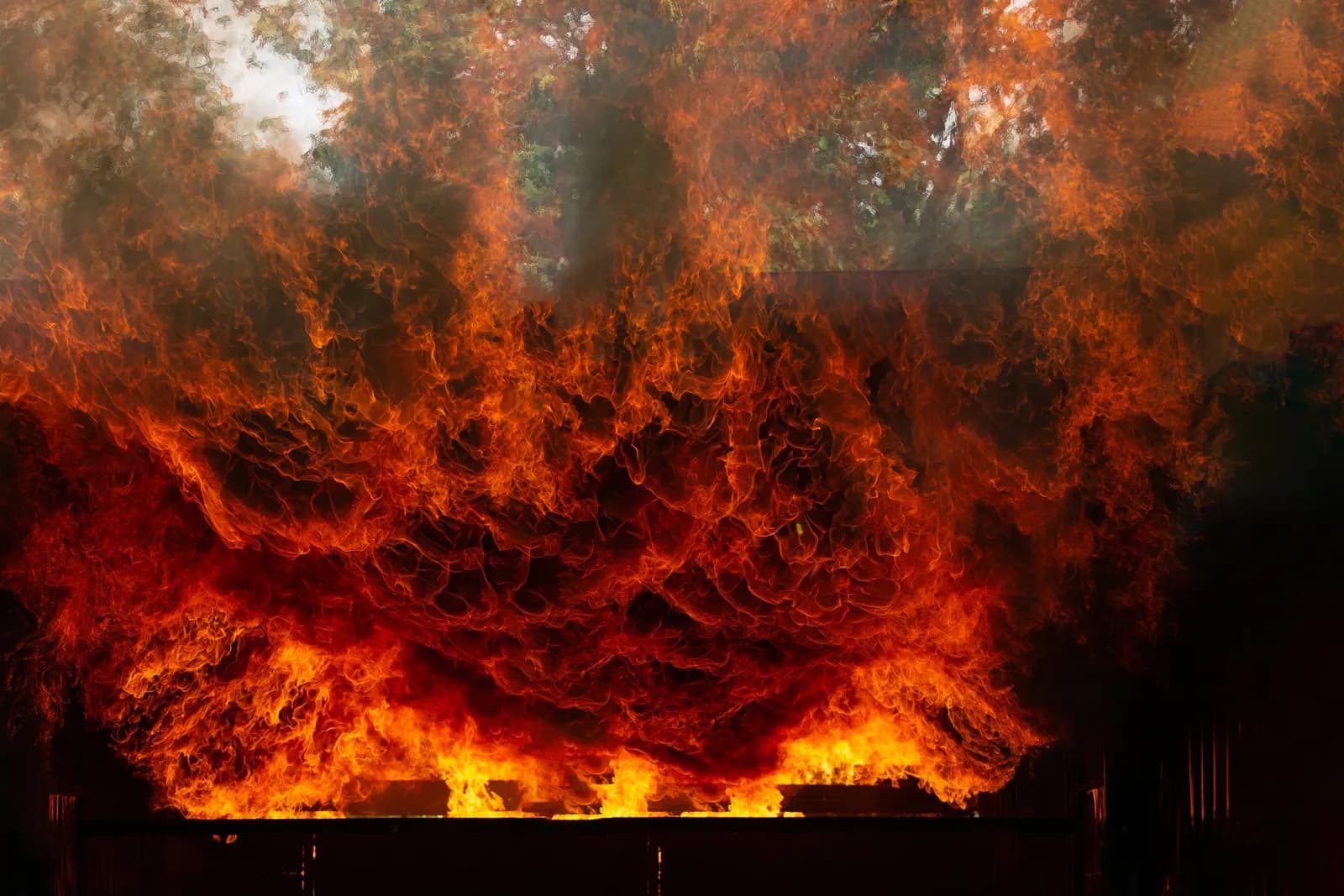
On the afternoon of June 17, 2026, fire broke out at the 500,000-square-foot cold storage facility operated by Lineage Logistics at 1400 S. Los Palos Street in Boyle Heights — a building holding roughly 85 million pounds of frozen meat, seafood, poultry, and other food. The insulation that kept those goods frozen trapped heat and smoke inside; 65-foot steel storage racks, a compromised roof, heavy rooftop solar panels, and ammonia refrigeration hazards kept crews from fighting the fire from within. Workers and nearby businesses were evacuated, authorities issued shelter-in-place orders and smoke advisories for the surrounding area, and on June 20 the Governor proclaimed a State of Emergency for Los Angeles County.
Lineage has said it believes the fire started while contractors or subcontractors working on the rooftop solar array were performing work on the roof; the official cause remains under investigation. That makes responsibility a question for more than one party — the operator, the building's owner, the solar contractors and subcontractors, and the maintenance companies responsible for the facility may all bear a share. Residents, workers, first responders, businesses, and property owners across Boyle Heights are now dealing with the consequences: respiratory symptoms, evacuations, ash-covered homes and vehicles, lost income, and remediation costs. California personal injury claims generally carry a two-year deadline, and claims involving public entities can require notice in a matter of months.
If you live, work, own property, or responded near the Boyle Heights warehouse fire, you may be entitled to compensation — and the deadlines to act have already started running.
Every detail you share through this case review — where you live or work, the symptoms you experienced, any medical care you sought, and the receipts, photos, and costs you have from evacuating or cleaning up — stays between you and our intake team. We do not sell, rent, or share your information with third parties, and your participation is never made public.
Damages vary by case, and no two households or businesses were affected the same way. Common categories of damages in fire and toxic-exposure claims like these include:
Emergency room visits, urgent care, primary and specialist care, breathing treatments, and prescriptions for coughing, wheezing, shortness of breath, chest tightness, eye and throat irritation, headaches, nausea, and asthma or other respiratory conditions worsened by the smoke.
Follow-up appointments, pulmonary testing, and the long-term monitoring that may be recommended after sustained exposure to smoke, ash, and fumes from a burning industrial facility — including care for children, older adults, and people with pre-existing respiratory conditions.
Pay lost to evacuation, illness, closed worksites, and time spent seeking treatment, plus revenue lost by nearby businesses that were evacuated, closed, or cut off from customers and deliveries while the fire burned and the cleanup continued.
Hotel stays, transportation, temporary housing, replacement clothing, air purifiers and protective equipment, professional smoke and ash remediation, HVAC and duct cleaning, and vehicle cleaning — the out-of-pocket costs of being pushed out of your home or workplace.
Smoke and ash contamination of homes, rental units, businesses, inventory, furnishings, and vehicles, damage to HVAC systems, and the loss of use of property that could not be safely occupied while the fire burned and during remediation.
Physical discomfort, anxiety about what was inhaled, disrupted sleep, the stress of evacuating with children or elderly family members, and the loss of the ordinary enjoyment of your home and neighborhood.
Depending on what the investigation shows, the warehouse operator, the building's owner, the rooftop solar contractors and subcontractors, and the maintenance companies responsible for the facility may be held accountable under theories including negligence, premises liability, toxic exposure, nuisance, and property damage. Injured workers may have a third-party claim in addition to workers' compensation, and families who lost a loved one may bring a wrongful death claim for funeral expenses, loss of support, and loss of companionship. Where the conduct is especially egregious, punitive damages may also be available.
See if You QualifyAt McNicholas & McNicholas, LLP, we represent the residents, workers, first responders, businesses, and property owners harmed by the Boyle Heights warehouse fire. Our attorneys work closely with each client to document what the smoke and ash cost them and to pursue accountability from the companies whose operations put an entire neighborhood at risk.
Our attorneys handle complex civil cases arising from fires, toxic releases, and other large-scale disasters — the kind of case that turns on industrial operations, contractor conduct, and community-wide exposure. The team reviewing your case has worked in this category before.
We come ready to take cases through to trial when defendants resist a fair resolution. The credible threat of trial is what drives settlements — and it's a posture not every firm can credibly hold.
You pay nothing up front and nothing during the case. Fees only apply if we recover compensation on your behalf.
This is an advertisement of the law firm McNicholas & McNicholas, LLP. McNicholas & McNicholas, LLP is responsible for this webpage. No representation is made that the lawyers are certified specialists or experts in any field of law. This webpage’s content is provided for informational purposes only by McNicholas & McNicholas, LLP. This site contains general information that may not be up to date, assumes findings of fact, and is for illustrative purposes only. A more detailed analysis of your particular data would be required to obtain a better estimate of what you are owed. There is no guarantee that a Court or Arbitrator would rule in your favor. This does not create a client-attorney relationship. It is not intended to provide legal advice. For legal advice, you will need to consult an attorney at McNicholas & McNicholas, LLP. Every case is different. Results depend on the unique law, facts and circumstances of each case.